INTRO
Burger Ops was created to address the lack of engaging and effective study tools for interactive student learning.
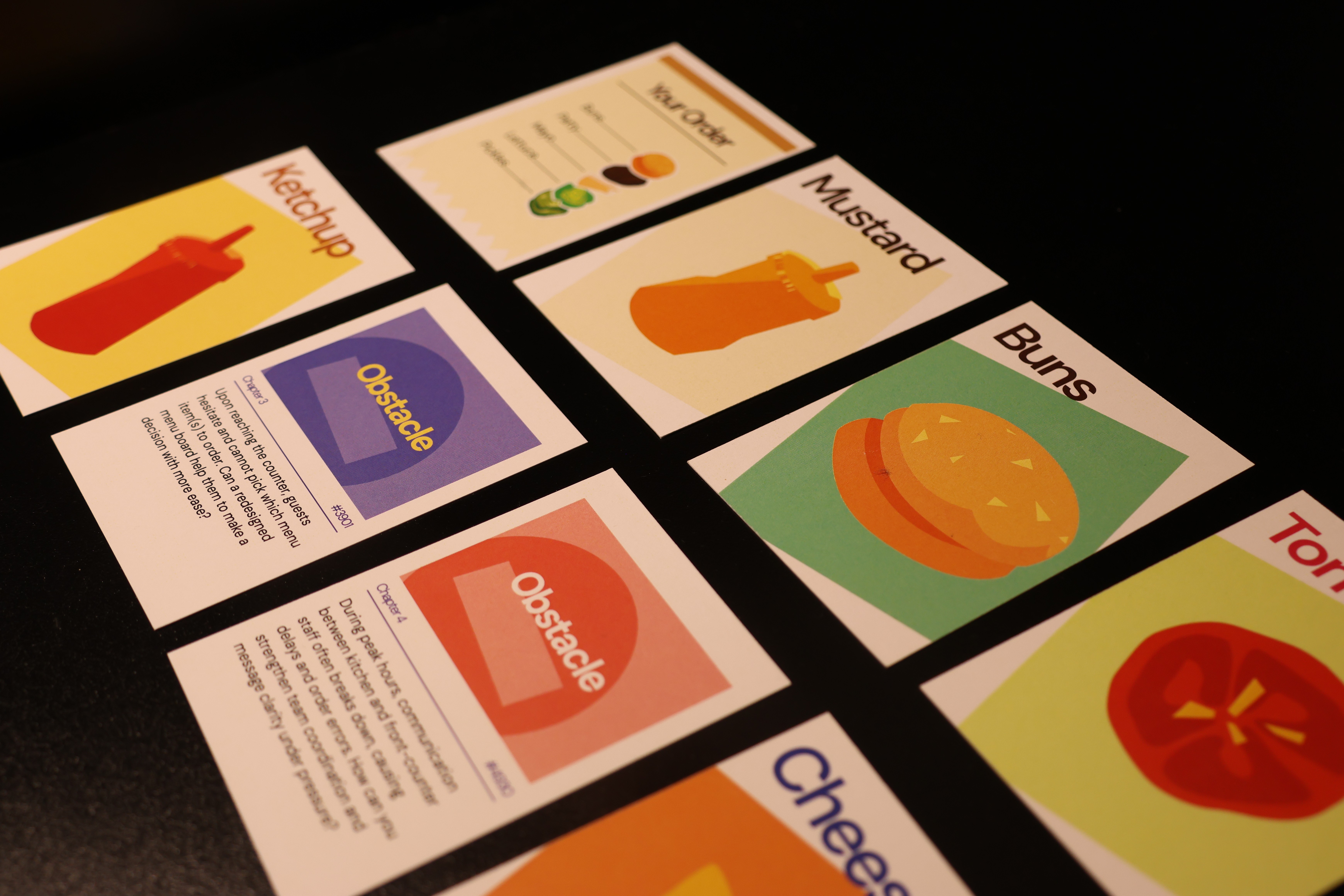
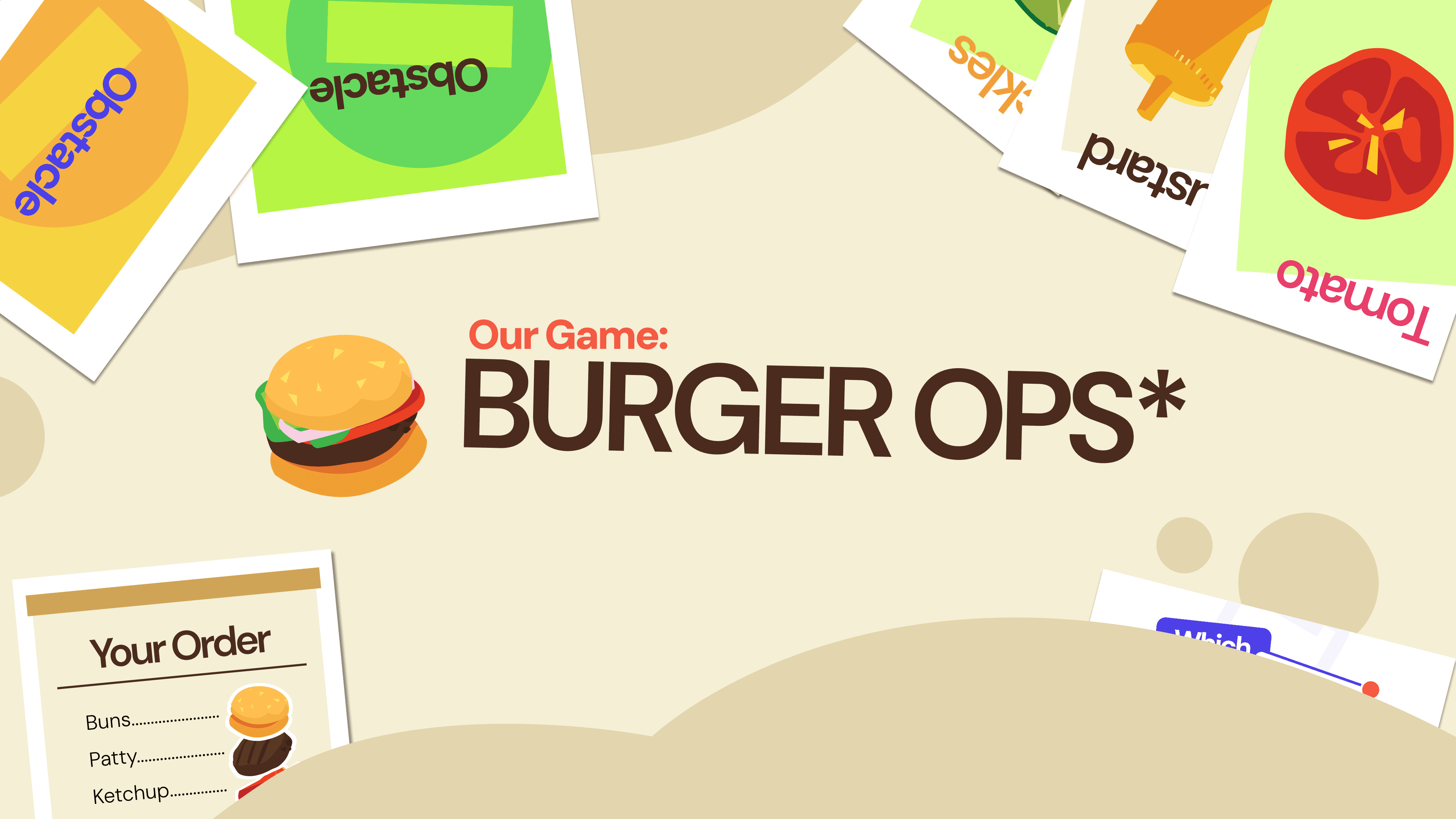
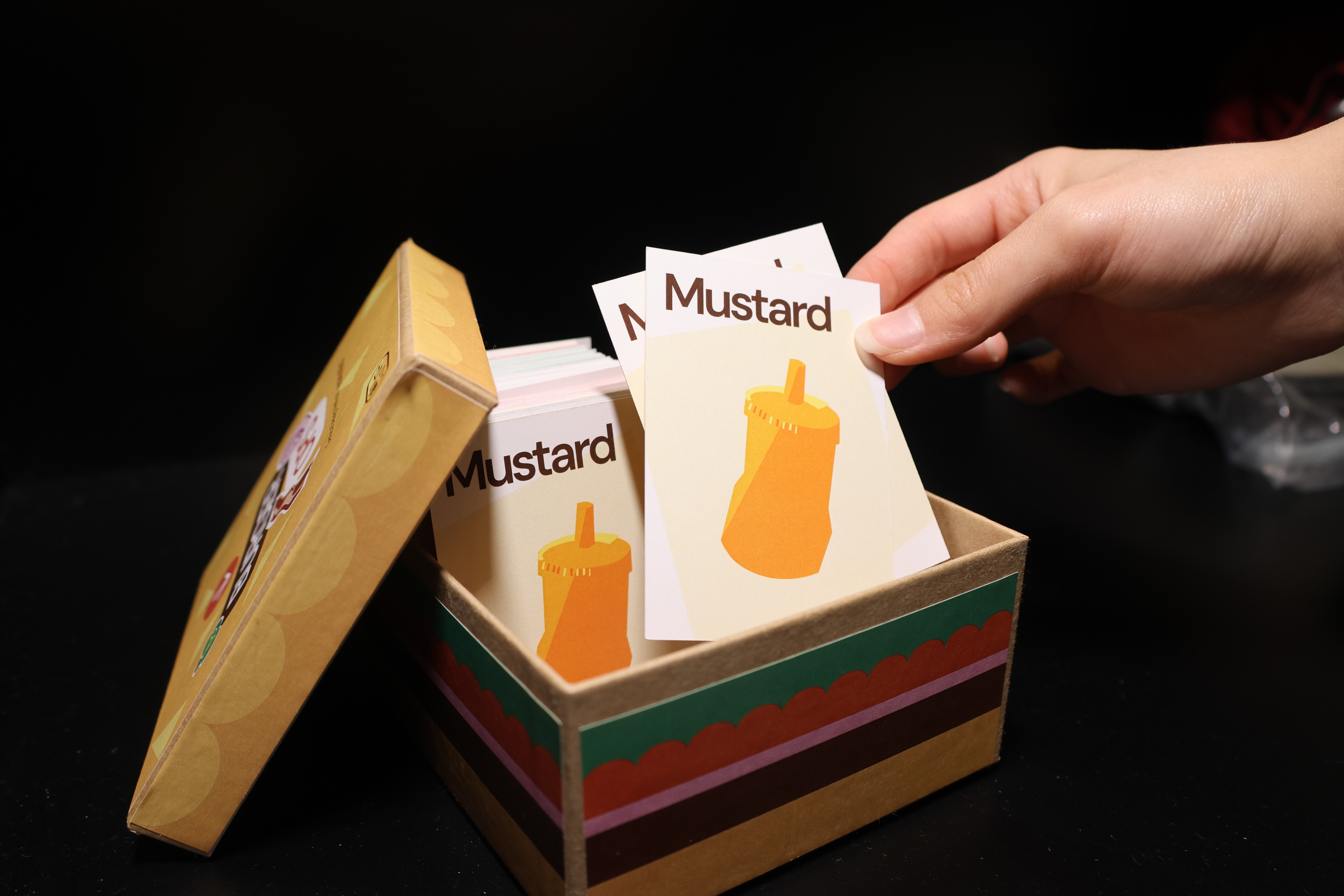
Developed in collaboration with fellow students, the project evolved into a physical educational card game designed to teach key methods from This Is Service Design Methods.
The objective of this project is to offer an engaging learning experience that combines study and gameplay, allowing participants to explore key concepts through play.
CHALLENGES
Traditional study methods often fail to support active recall, collaboration, and sustained engagement, while most existing study tools are designed primarily for individual learning rather than group interaction.
As a result, no single platform effectively integrates collaboration, discussion, and gameplay into one cohesive experience.
This gap presents an opportunity to create a study tool that transforms group learning into a more interactive, engaging, and enjoyable experience.
The design focuses on collaborative, game-based challenges that promote active recall and reasoning to sustain student engagement.
Built specifically for group play, the experience encourages teamwork, peer discussion, and shared decision-making through real-time interaction and collaborative gameplay.
Friendly competition is intentionally emphasized to reinforce repeated recall and strengthen effective study behaviours.

Market Analysis
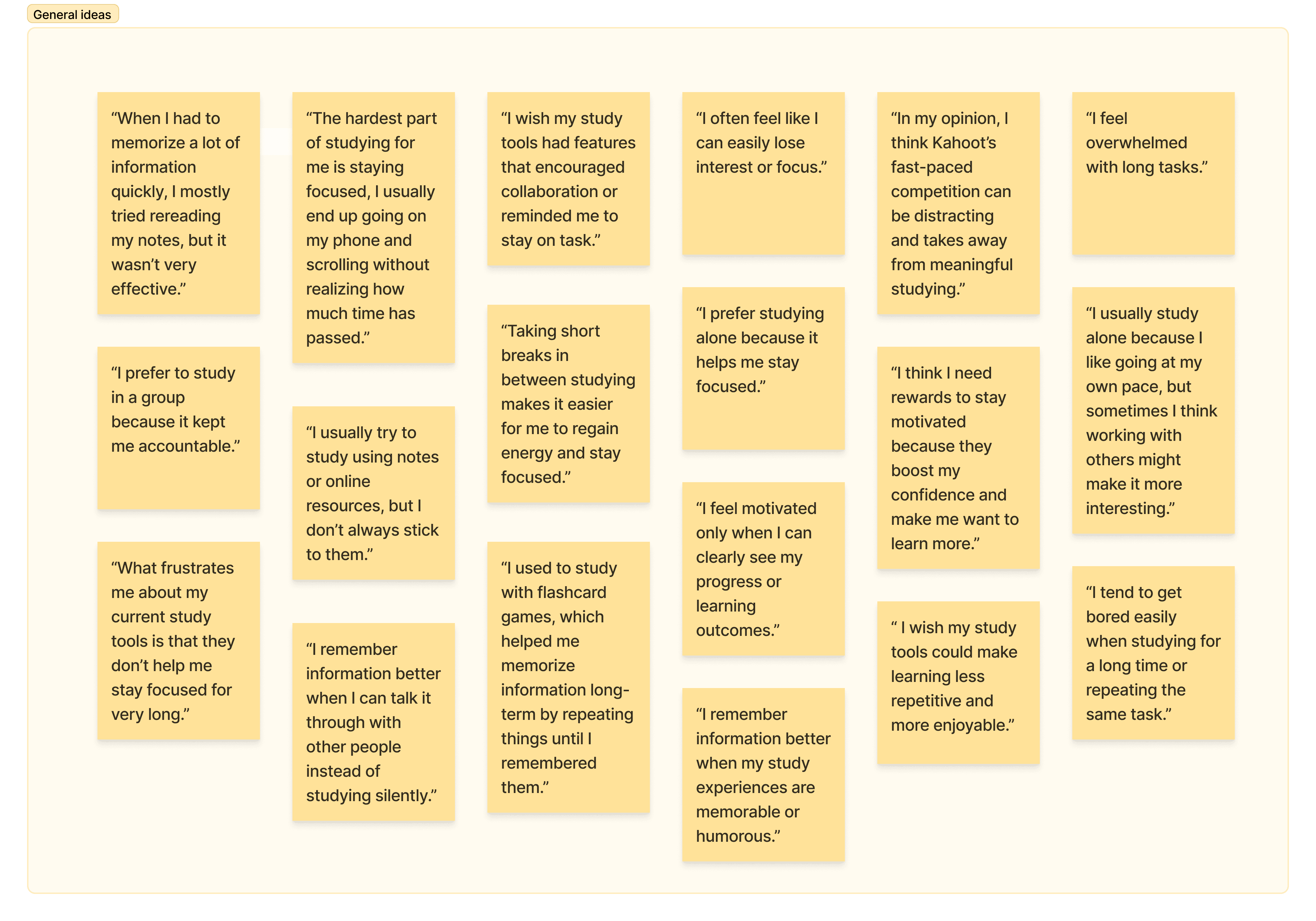
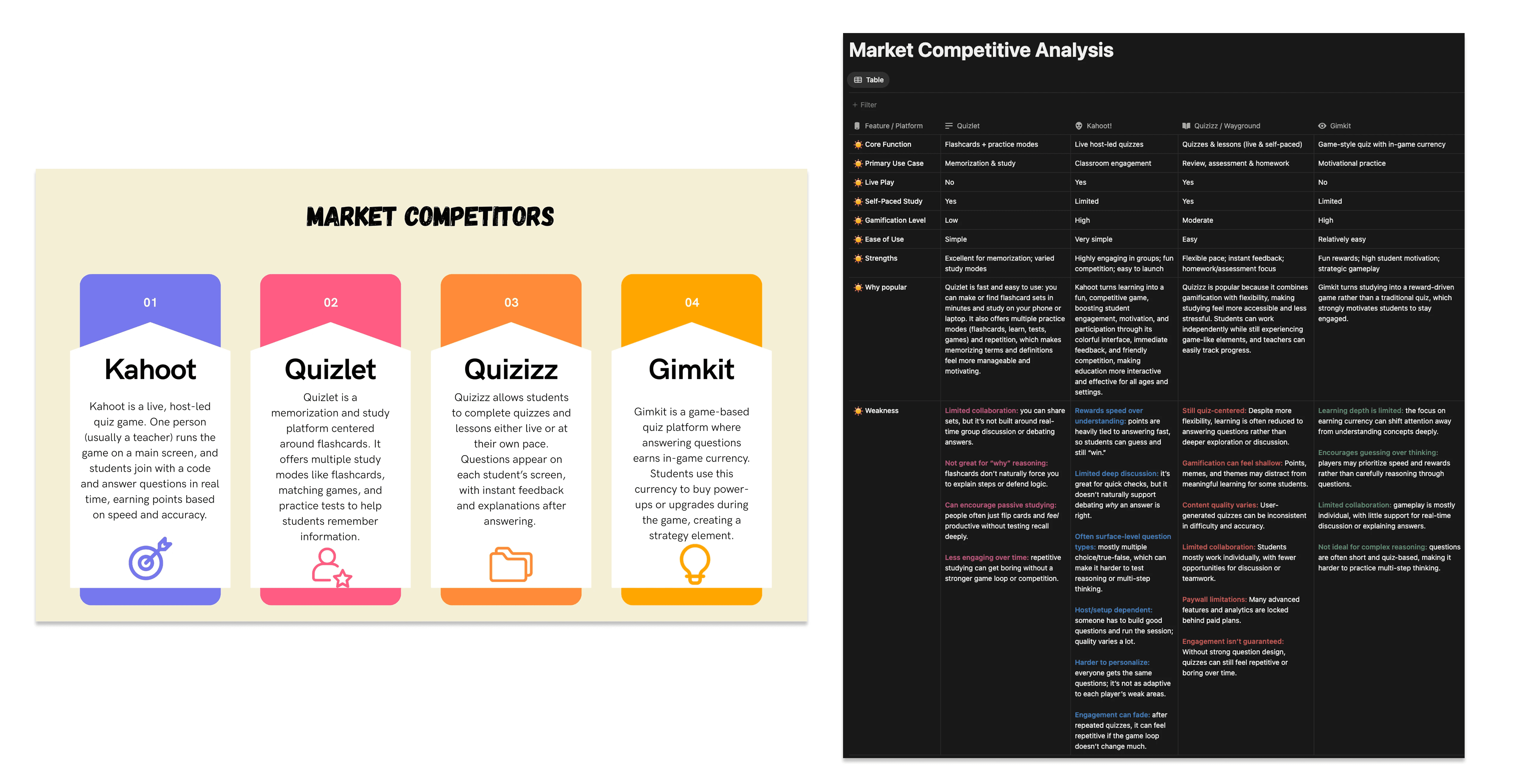
The current market is saturated with online educational games, but our research found several key gaps despite their convenience:
Limited collaboration opportunities
Short-lived engagement
Shallow learning depth
Not well suited for complex reasoning
Understand the Market
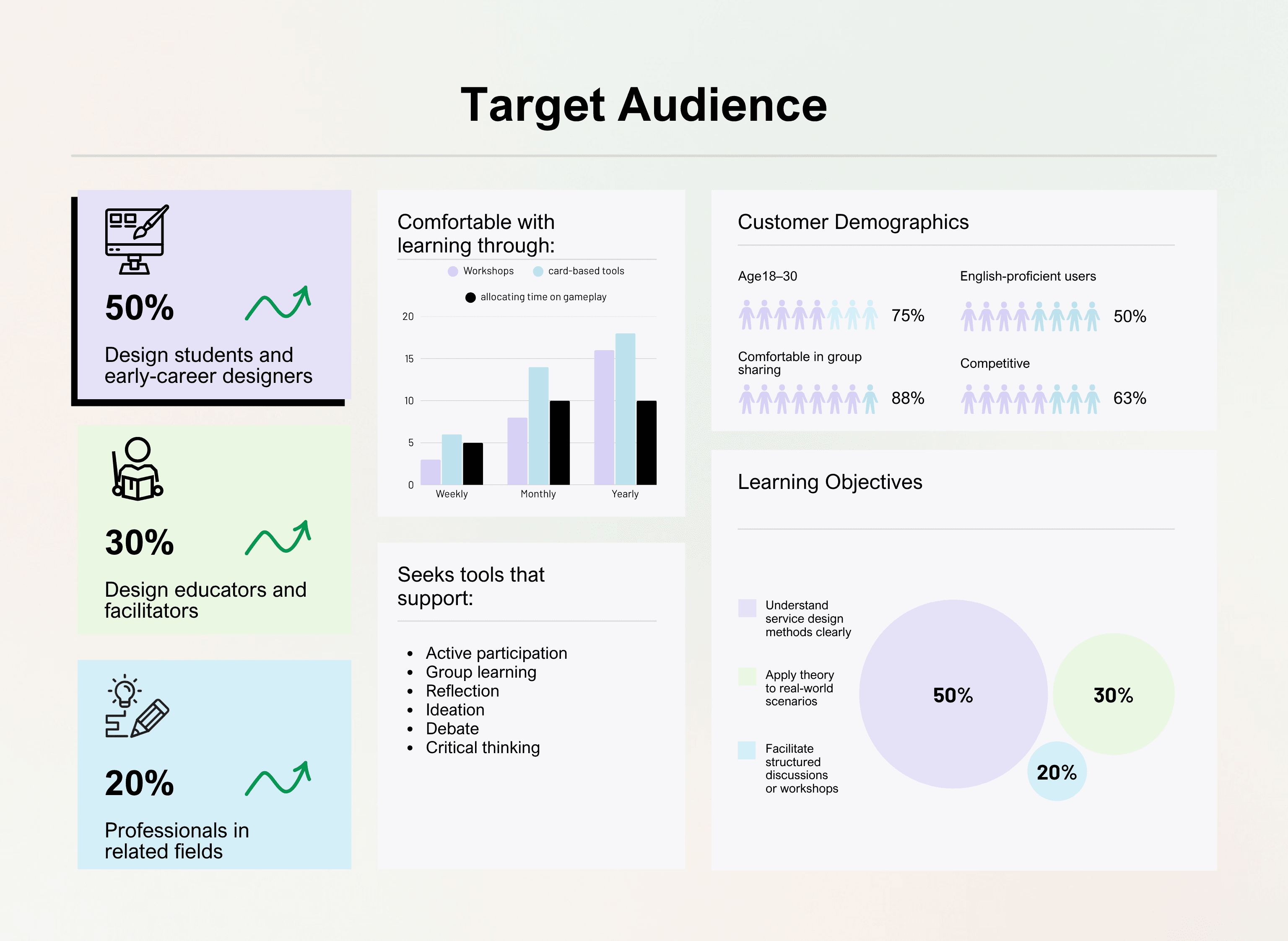
Audience segmentation helps tailor features, tone, and learning formats to real needs. The chart shows our primary users: design students, early-career designers and related professionals.
Personas
Adora and Ethan are two university student personas developed from the target audience to highlight key opportunities:
Features discussion-based gameplay
Reward incentives
Focus on long-term memorization
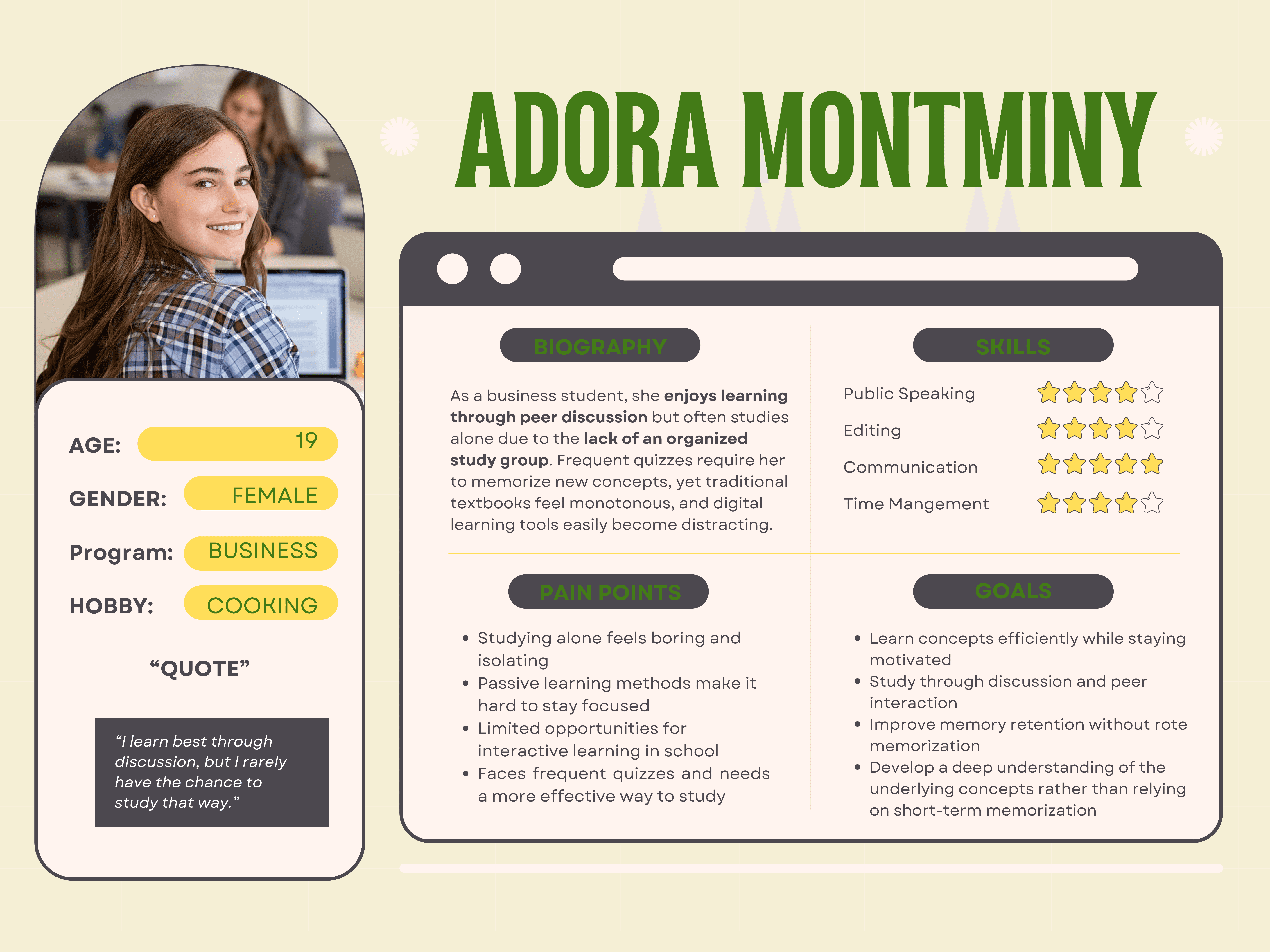
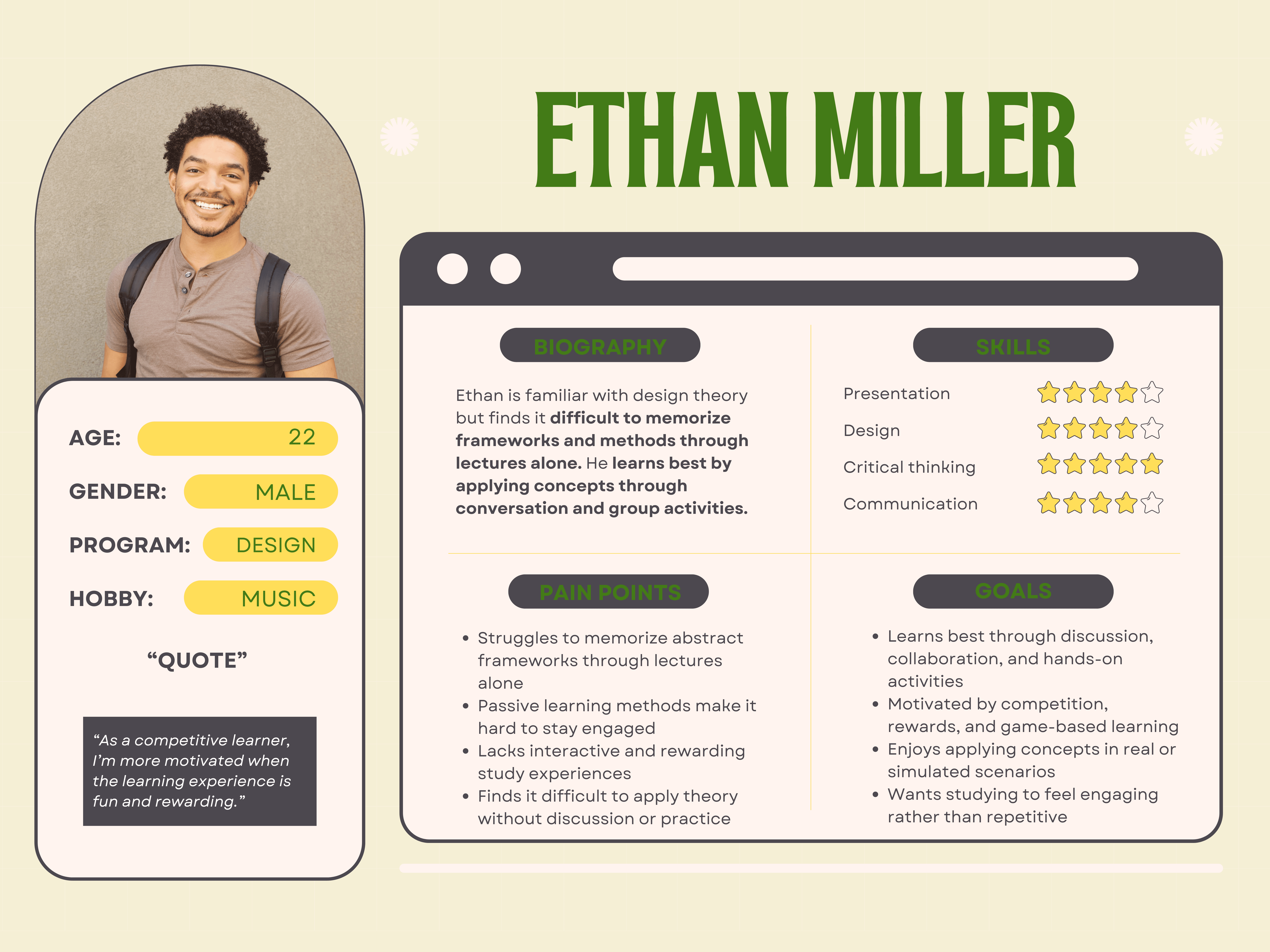
"As a competitive university student learner, I want learning to include rewards and peer interaction so that I stay motivated and can memorize and apply design methods more effectively."
Style Guide
Building on the insights from our personas, we next focused on defining a style guide that visually supports their learning behaviors and motivations:
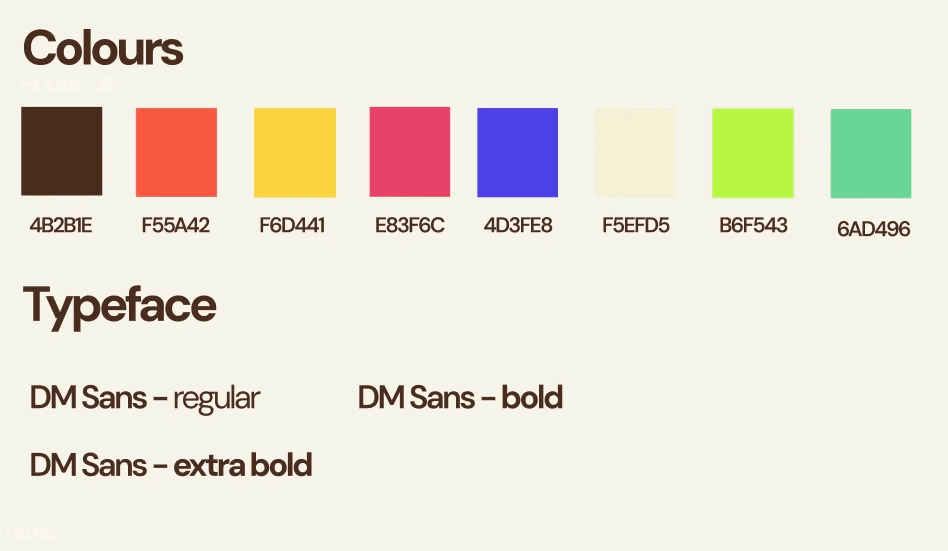
Colour Choice
Bright, high-contrast colours → energetic, playful tone
Support quick recognition, engagement, and memory
Neutral tones → visual balance and readability
Typeface Choice
DM Sans → clean, legible, highly readable
Minimal design system → clarity during gameplay
Modern, approachable tone for educational game
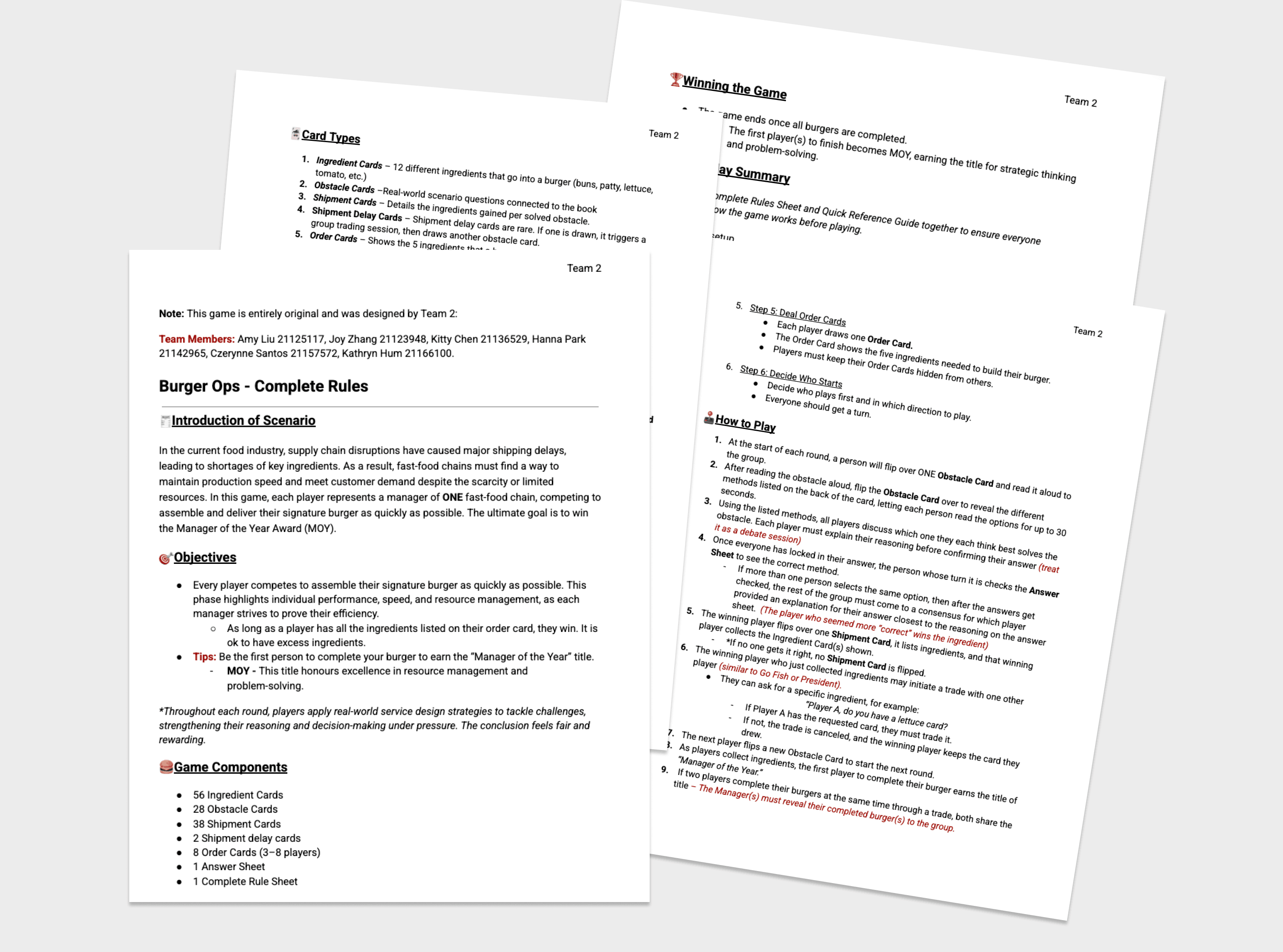
Complete Rule
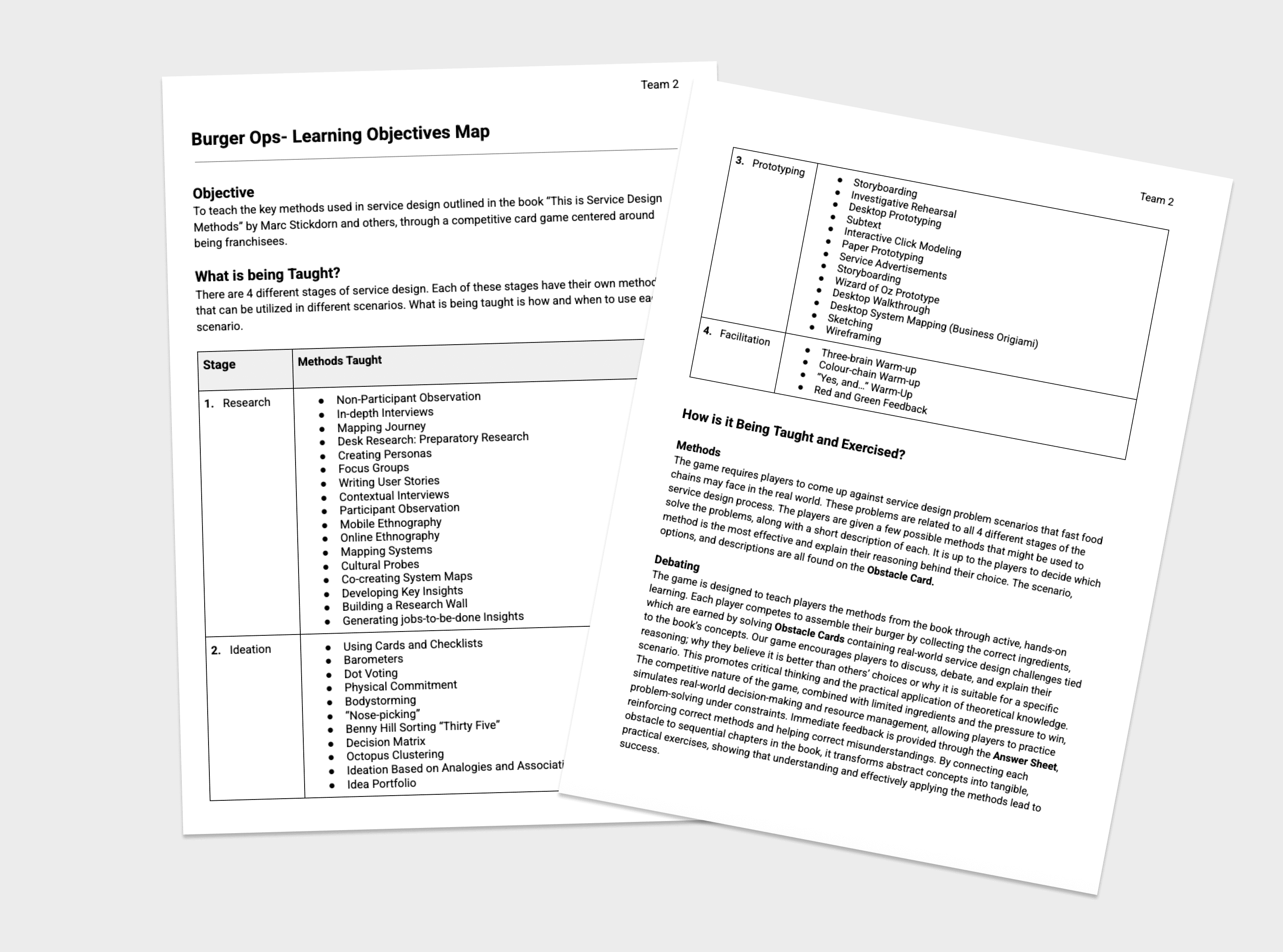
Learning Objectives
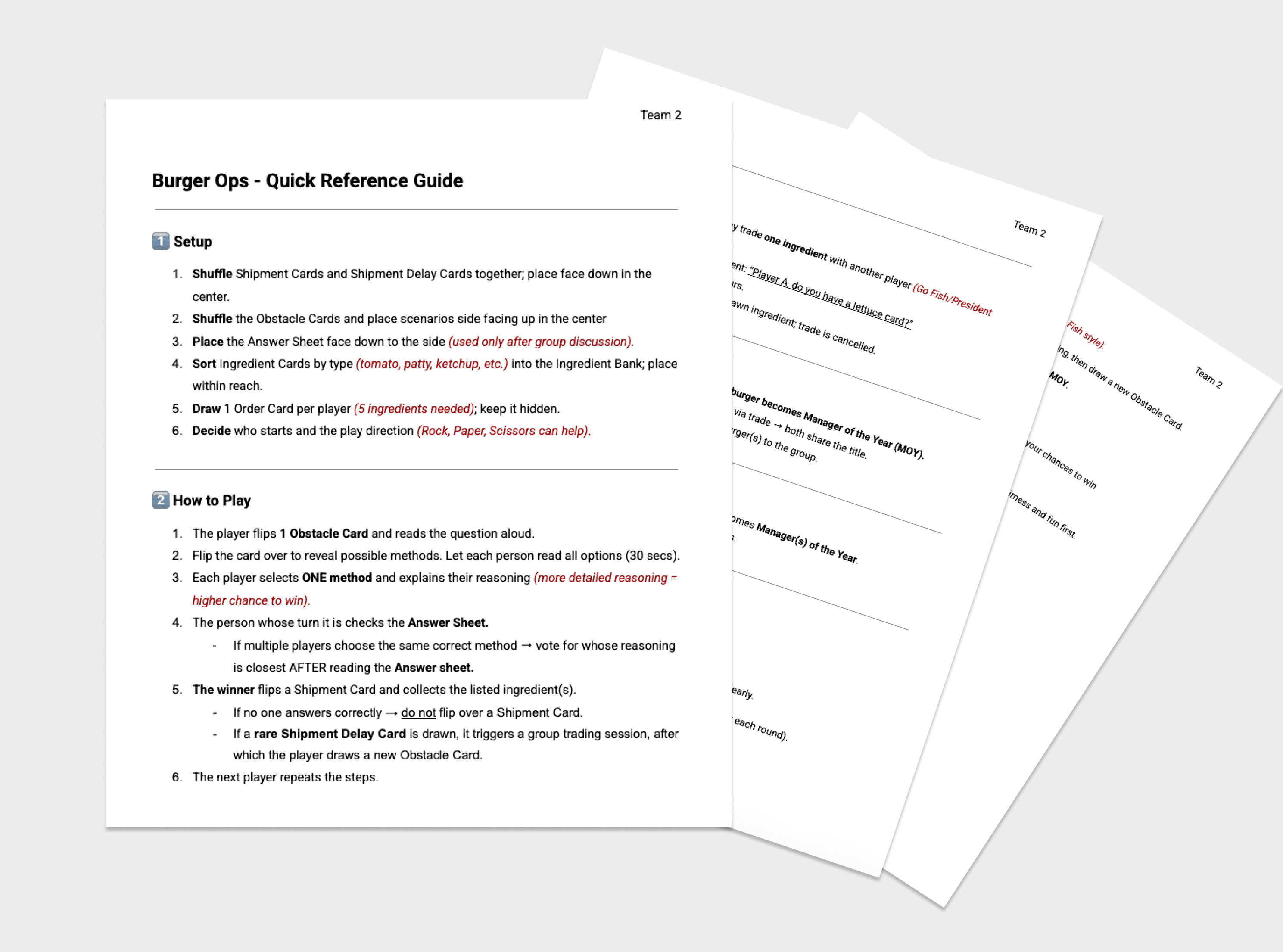
Quick Reference
Card Setup
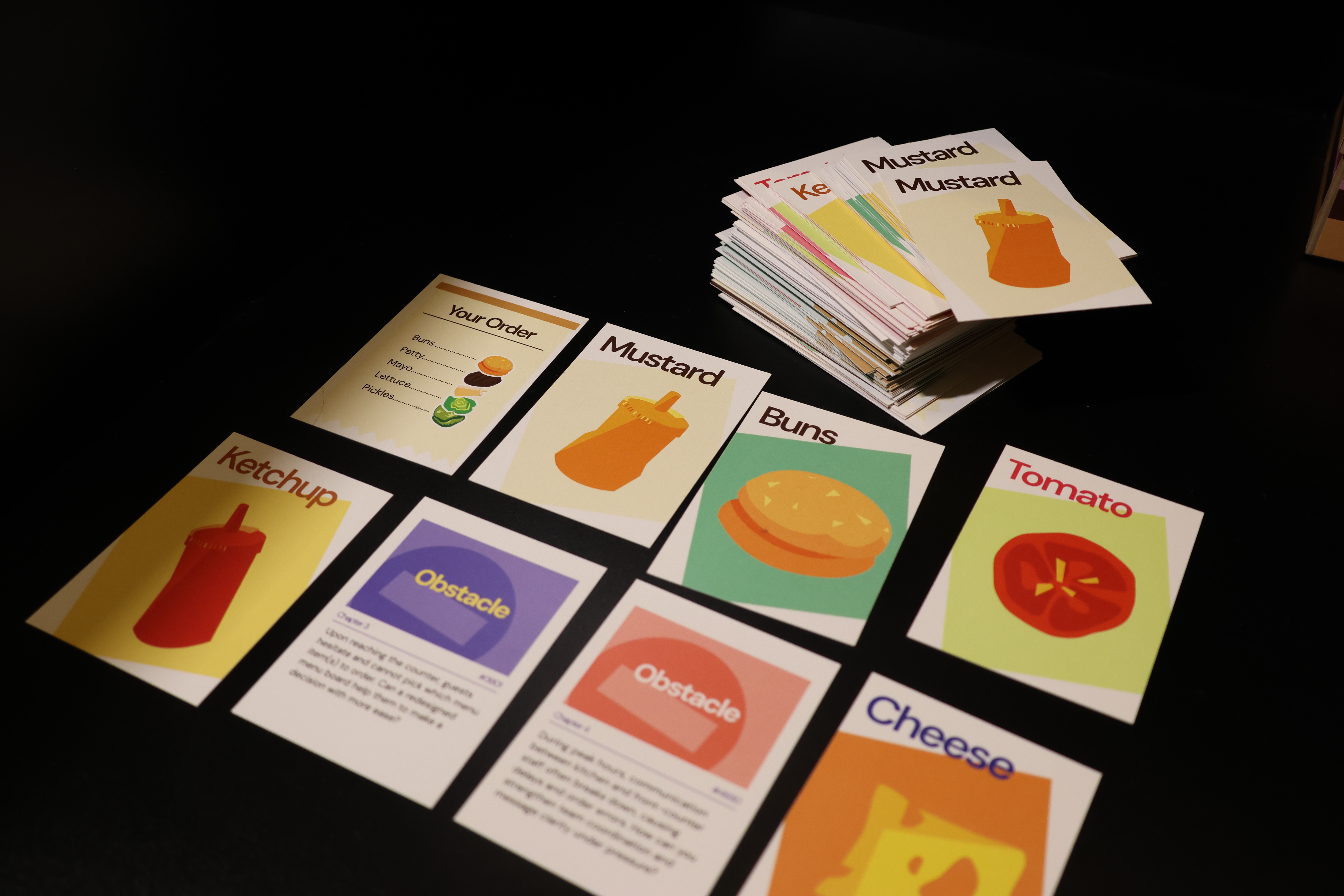
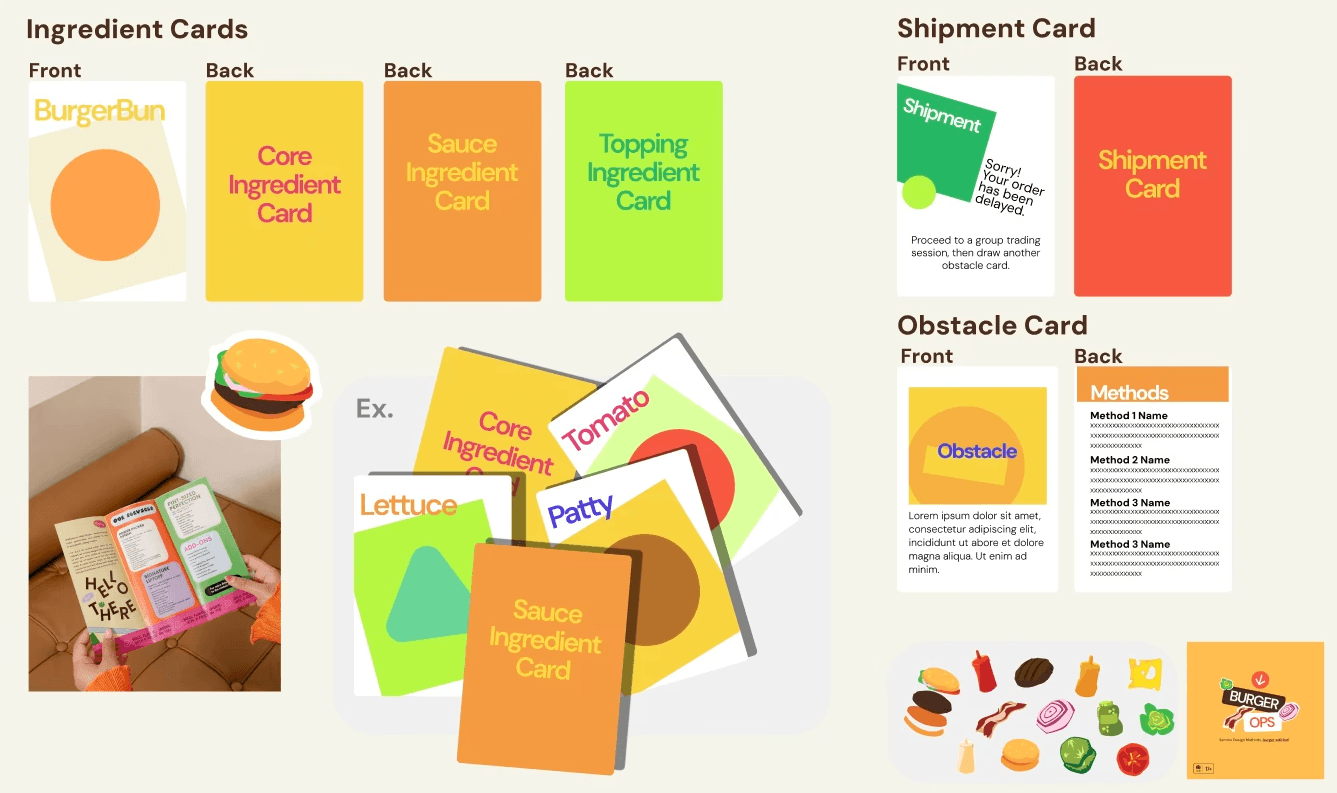
At the start of the game, players receive a setup sheet that guides them through properly arranging the table and preparing to play.
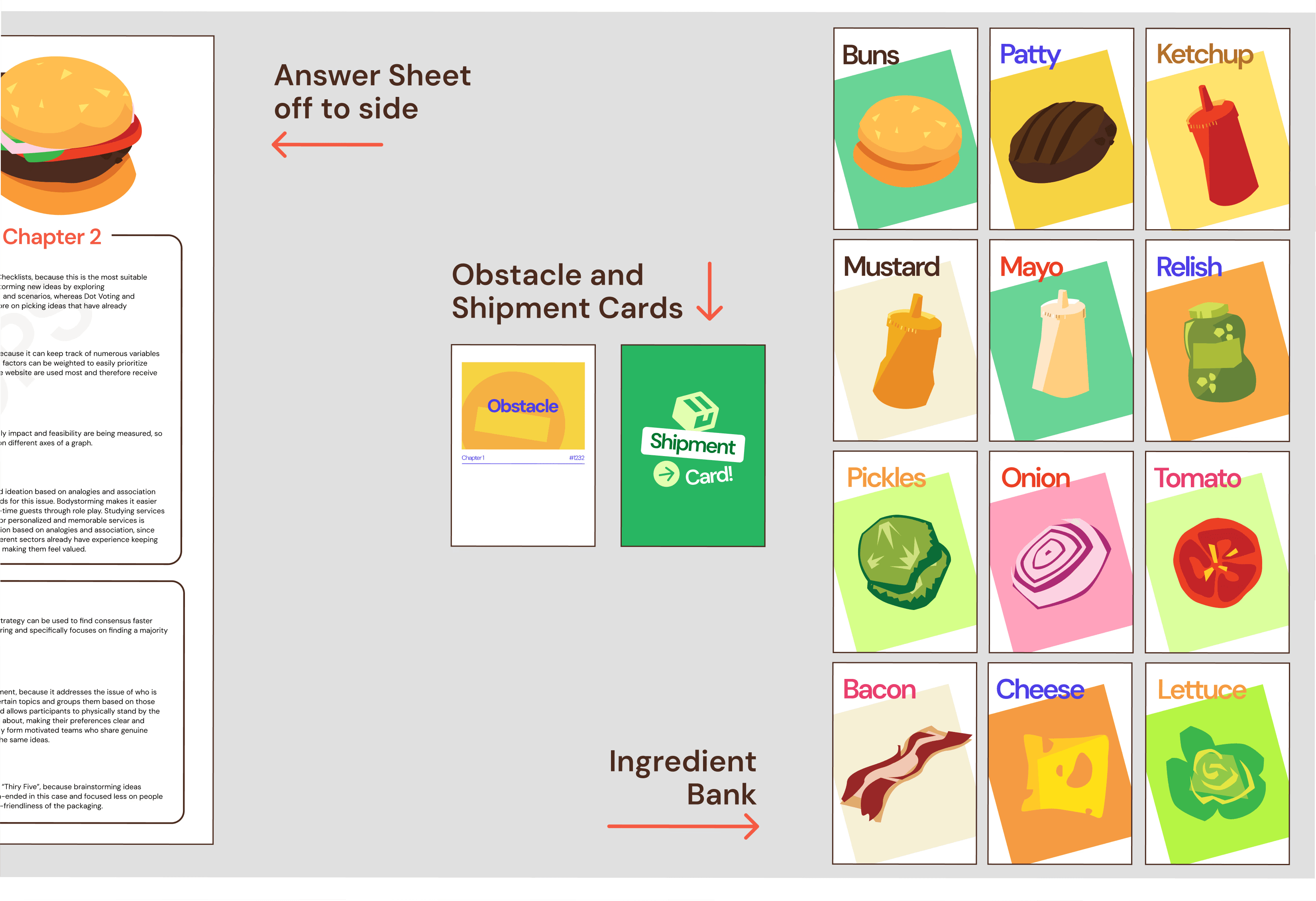
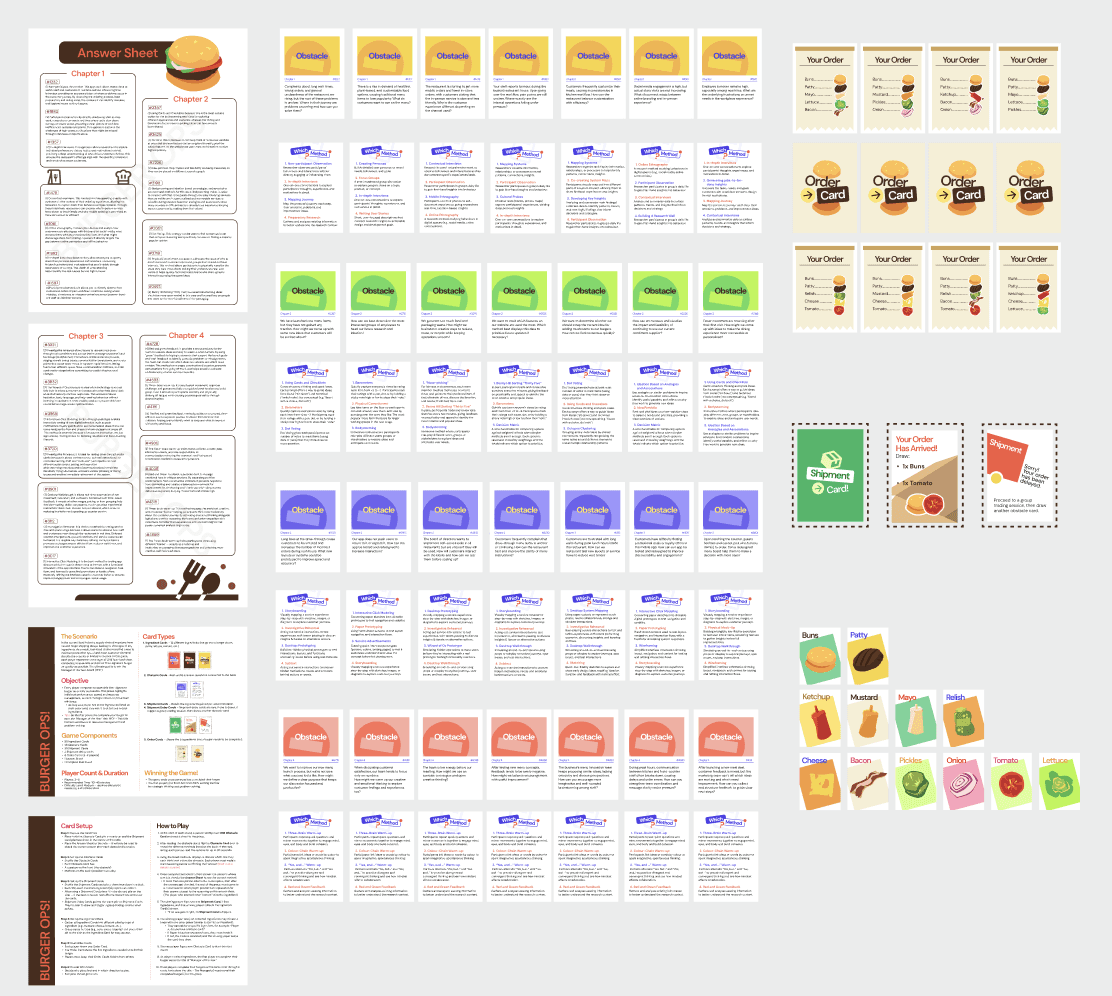
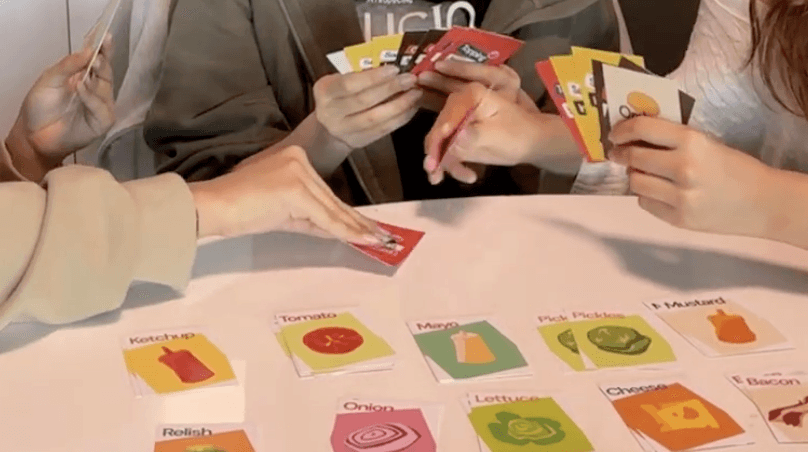
Players draw an Obstacle Card (question), choose a method, and verify it on the Answer Sheet. They then use Shipment and Ingredient Cards to complete the required action and progress through the game.
Trading Session
Draw a Shipment Card → request one ingredient from another player
Ingredient available → trade happens
Not available → trade cancelled
Draw a Shipment Delay Card → group trade triggered
Winning the Game
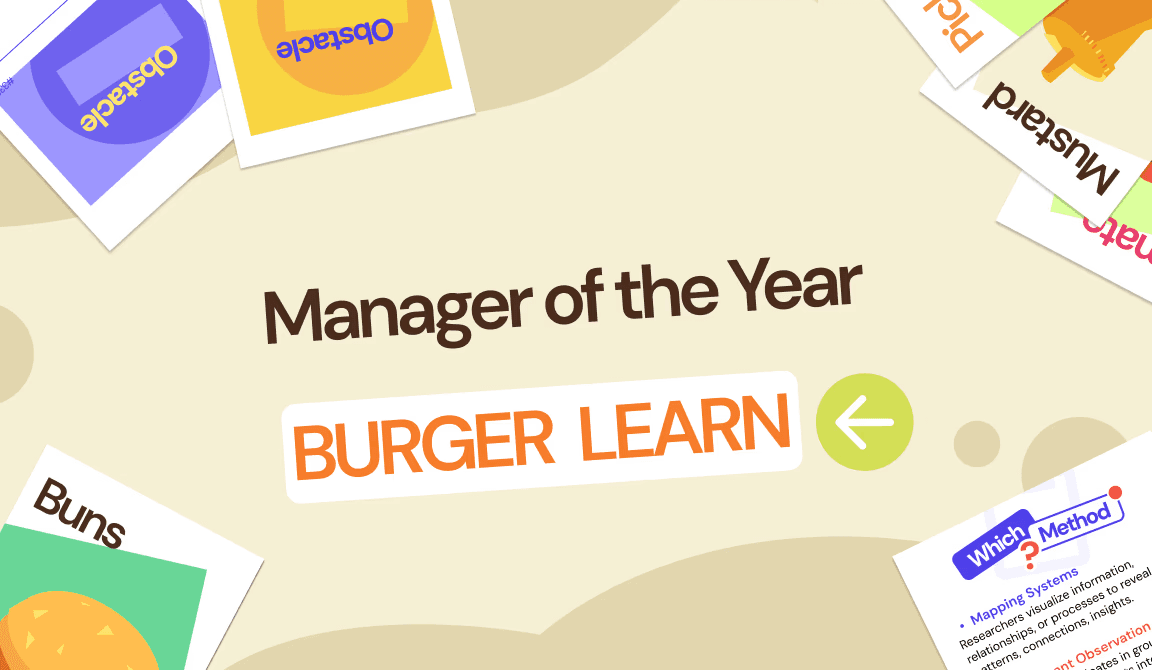
The first player to collect all ingredients listed on their order card and complete their burger wins and is crowned Manager of the Year.
Game Overview Video
*Quick Explanation about the game*
Usability Testing
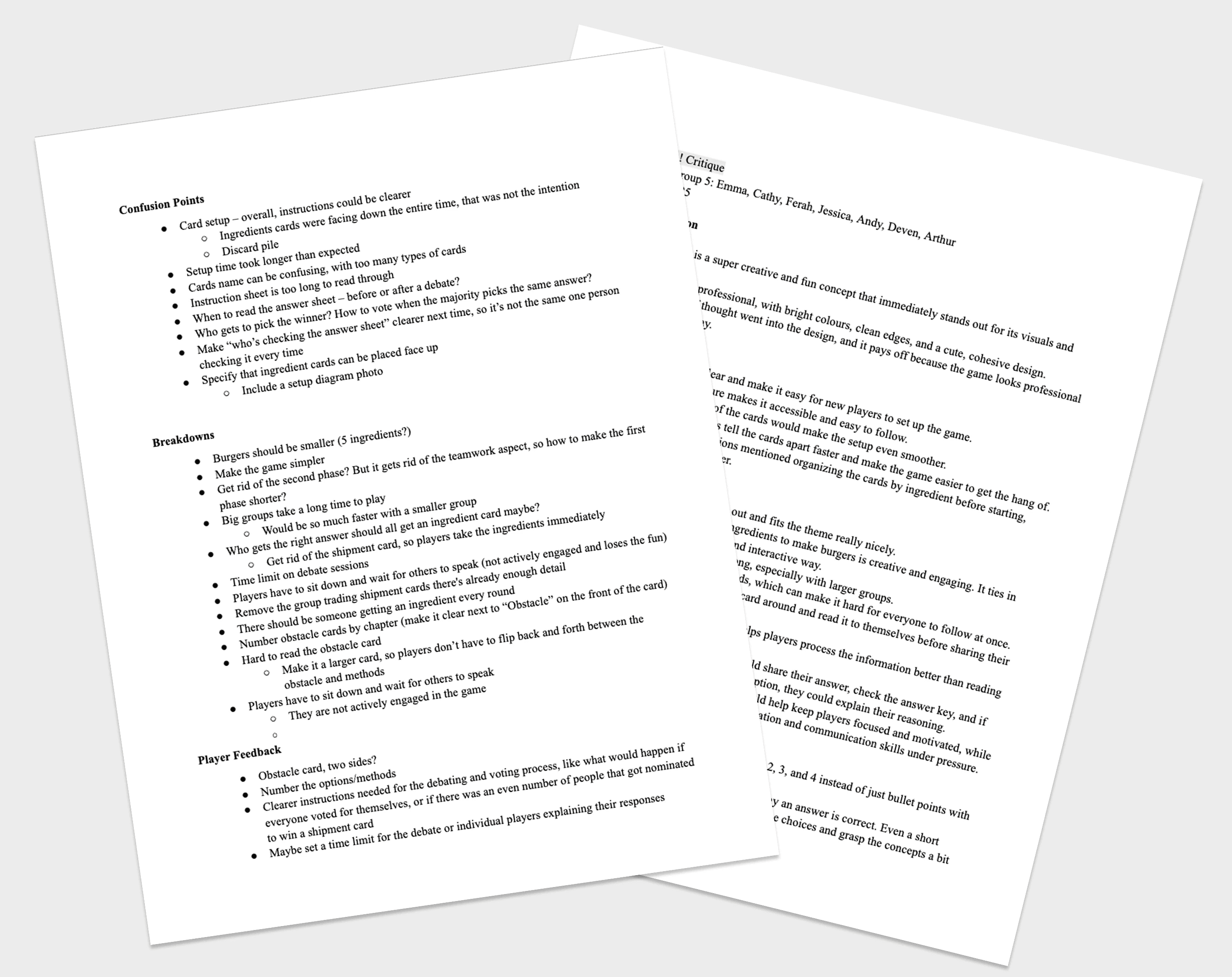
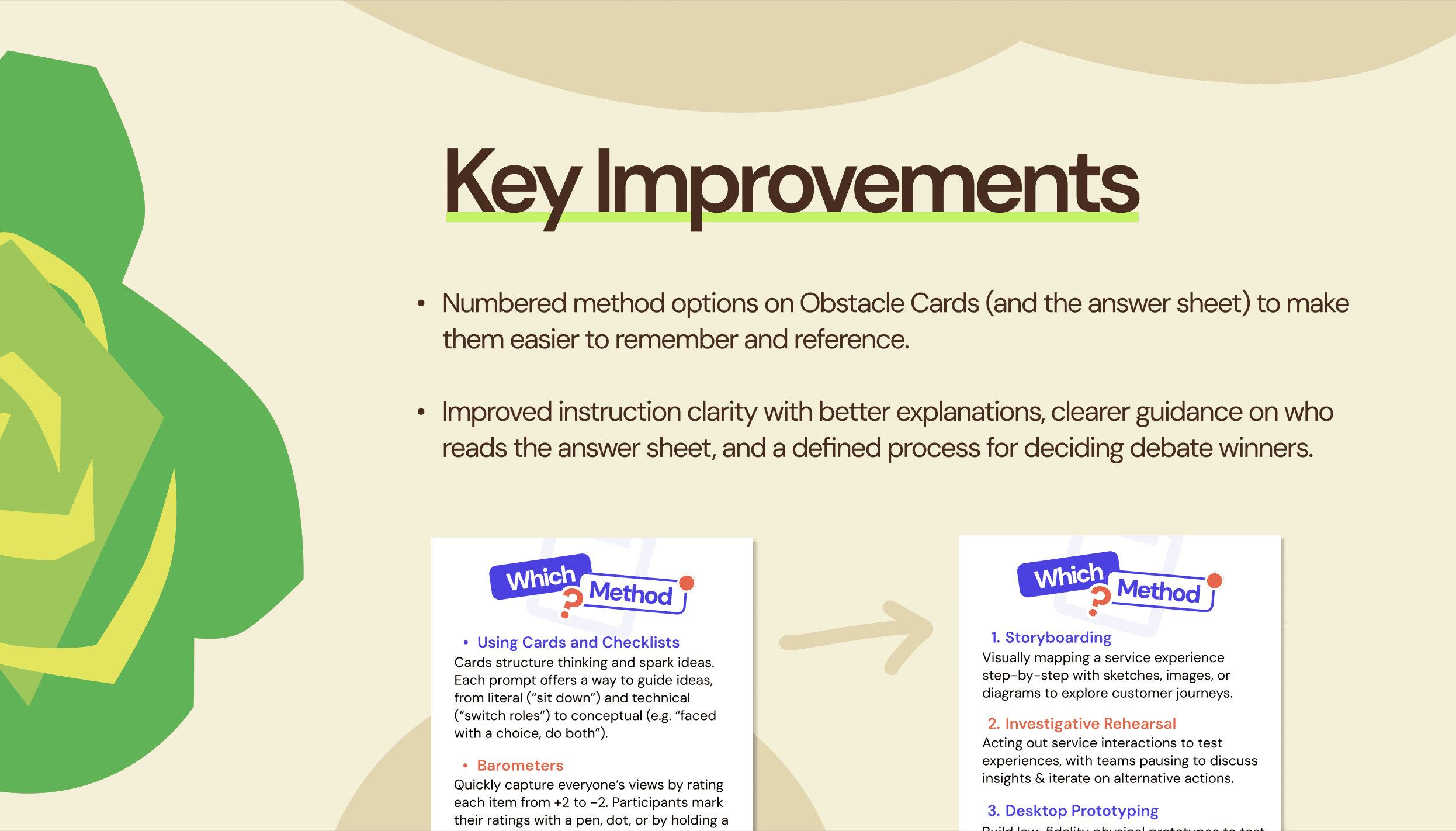
Based on user feedback, we identified improvements to streamline the learning experience:
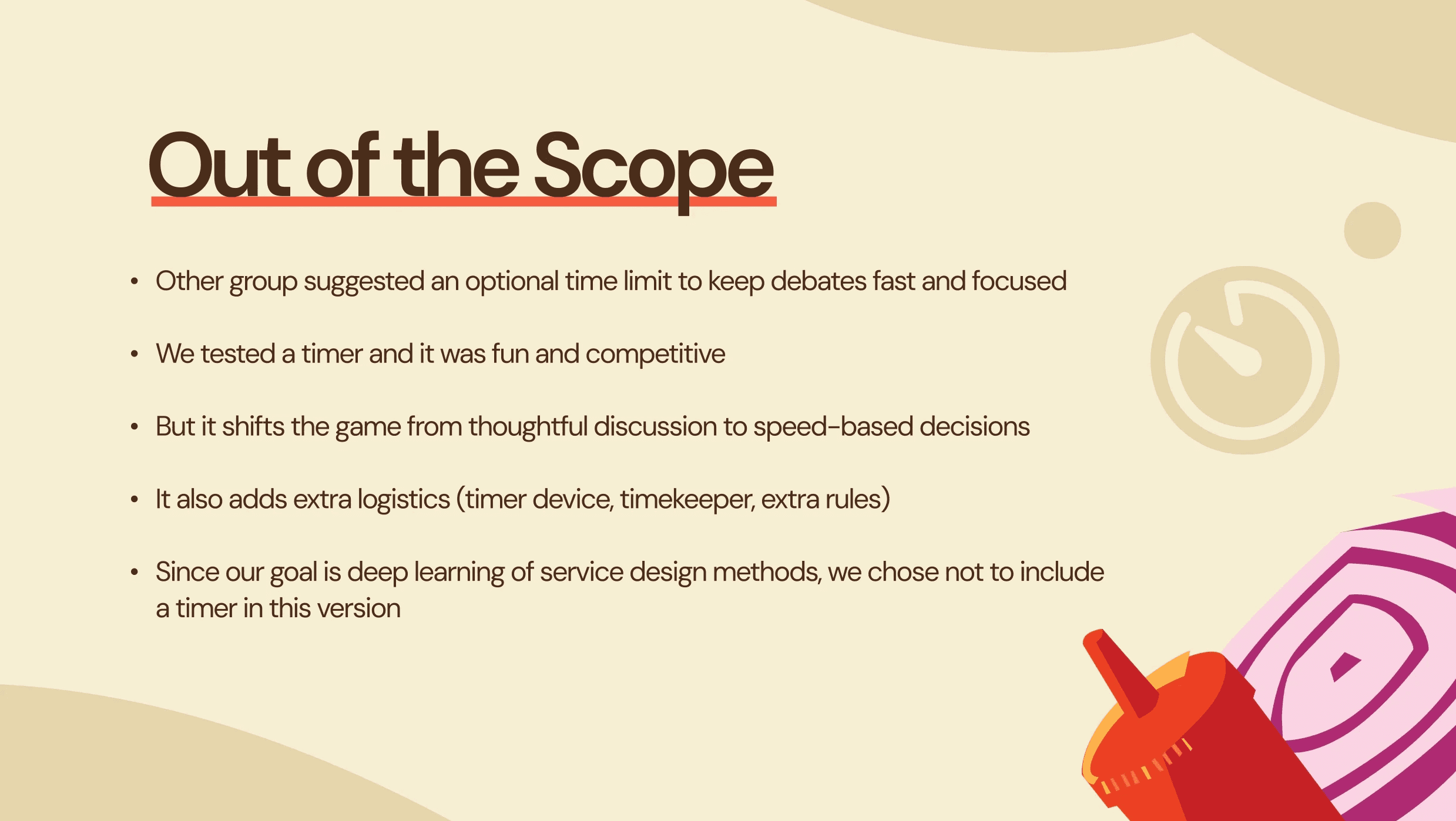
Pacing: Add a timer to keep gameplay moving in larger groups.
Recall: Number obstacle-card method options for easier reference.
Clarity: Expand the answer key with brief rationales for correct choices.